Mesoamerica: The Milpa and the Sacred Corn
Mesoamerica: The Milpa and the Sacred Corn In the beginning, according to the Maya, there was corn. Not metaphorically. The Popol Vuh — the Maya...
Listen to this post
In the beginning, according to the Maya, there was corn.
Not metaphorically. The Popol Vuh — the Maya creation text — says the first humans were formed from maize. The gods tried wood. They tried mud. Both failed. Then they ground white and yellow corn, mixed it with water, and shaped it into the people who would tend the earth.
That story is not superstition. It is a declaration of relationship.
The Maya did not grow corn. They were, in their own understanding, made of it. That is a fundamentally different starting place than a row in a seed catalog.
The Plant That Shouldn't Exist
Before we can talk about Mesoamerican seed keeping, we have to talk about what they did with corn — because it is one of the most extraordinary acts of plant cultivation in human history.
The wild ancestor of corn is called teosinte. If you placed an ear of modern corn next to a stalk of teosinte, you would not recognize them as relatives. Teosinte produces a thin stem with a handful of hard, exposed kernels. There is no cob. No husk. No abundance.
What we call corn today did not exist in nature. It was made. Over thousands of years — beginning around 9,000 years ago in what is now southern Mexico — people selected, replanted, observed, and selected again. Every generation choosing the plants that produced more, that stored better, that fed well. They transformed a scrubby grass into one of the most productive food crops in the world.
They did this without microscopes. Without genetics textbooks. Without anything except attention, memory, and relationship with the plant across generations.
The Milpa: A System, Not a Field
The central agricultural practice of Mesoamerica was the milpa — and it was not just a garden. It was an ecosystem managed by human hands.
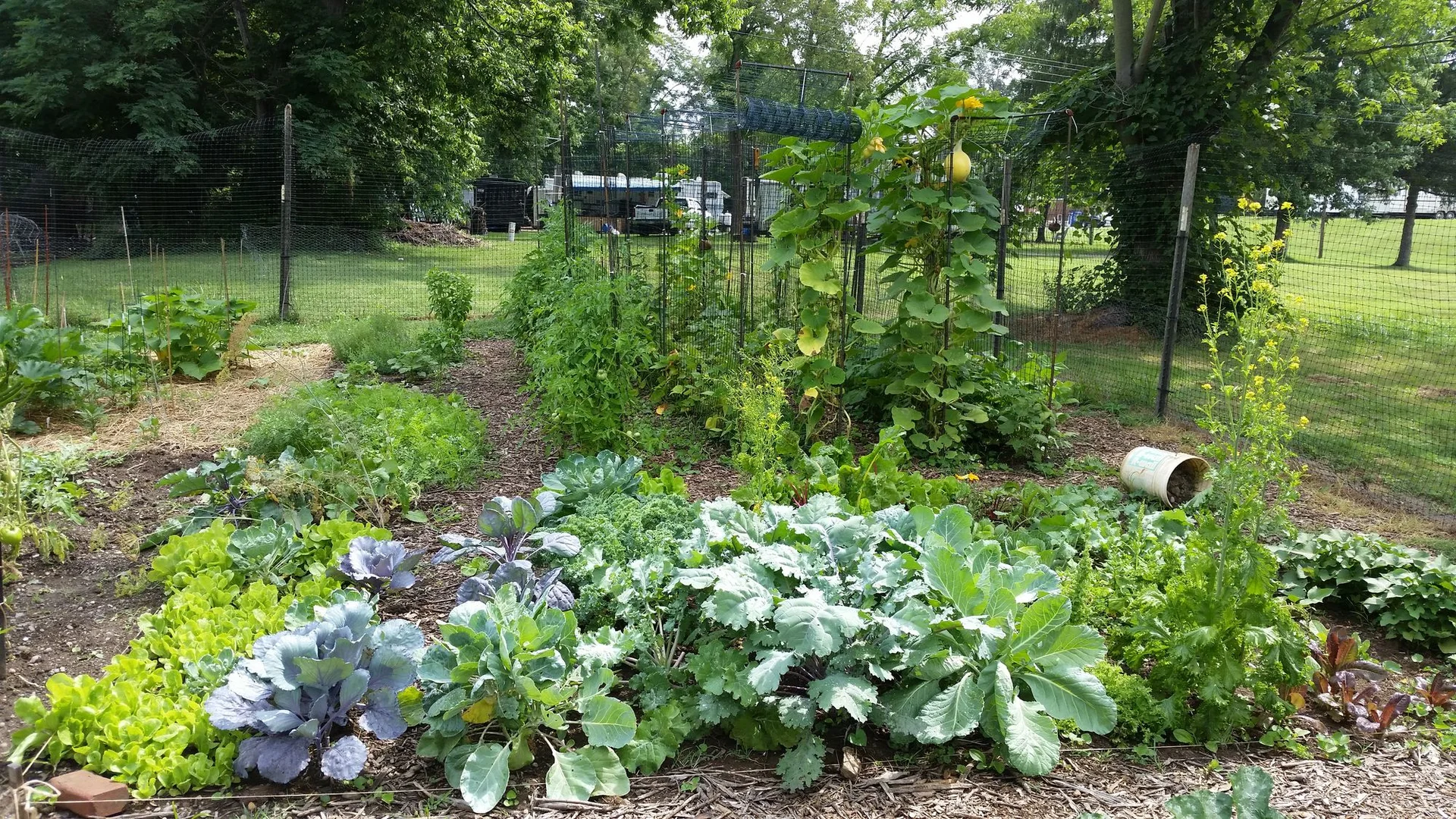
Corn, beans, and squash planted together. Not by accident — by design. The corn grows tall and provides structure. The beans climb the corn stalk and fix nitrogen into the soil. The squash spreads wide across the ground, shading out weeds and holding moisture. Three plants, three functions, one system. Each one feeding the others.
This is companion planting. This is nitrogen cycling. This is soil conservation. None of these words existed yet in the vocabulary of the people practicing it. What they had instead was a relationship with each plant, accumulated over generations, expressed through practice.
The milpa was also rotational. Fields were farmed for a few seasons, then allowed to return to forest, then cleared and farmed again. The land rested. The soil recovered. This was not laziness or primitive resource management — it was the understanding that the land needed time, and that patience produced more than exhaustion.
Seeds Were Not Products
In Aztec Tenochtitlan — the city that would become Mexico City — engineers built chinampas: narrow garden islands constructed from lake mud and anchored vegetation, rising from the shallow waters of Lake Texcoco. These were not floating gardens, as they are sometimes called. They were fixed, engineered, intensely productive growing spaces, surrounded by water that regulated temperature and provided constant moisture.
The productivity was extraordinary. Multiple harvests per year. Vegetables and flowers and herbs grown together. Seeds saved from the best producers each season.
But the saving of seed was never a transaction. It was ceremony.
Planting was governed by the agricultural calendar — a precise system that organized time around the needs of the crop. When to plant. When to harvest. When to let the field rest. Priests read the calendar. Farmers followed it. The two were not separate categories of knowledge — they were the same knowledge, expressed through different roles.
Seeds were blessed before planting. Fields were prayed over. The act of putting a seed in the ground was understood as an agreement with something larger than the planter.
In this worldview, seeds were not inputs. They were not commodities or intellectual property or units of yield. They were living participants in a reciprocal relationship. You cared for them. They fed you. You saved the best of them back to the earth. The cycle continued.
What They Built
By the time Spanish colonizers arrived in the 16th century, Mesoamerican farmers had developed hundreds of distinct varieties of corn — adapted to altitude, rainfall, growing season, taste, storage, ceremony. Varieties for tortillas. For tamales. For fermentation. For color. For drought years.
They had developed chocolate, vanilla, tomatoes, chiles, avocados, squash, beans, and dozens of other crops that now feed the entire world.
They did not do this by accident. They did it through thousands of years of observation, memory, and intentional selection. They did it because seeds were not separate from culture — seeds were culture. Seeds were identity. Seeds were survival.
When that knowledge was disrupted — when the people who held it were displaced, killed, or forcibly converted — what was lost was not just agricultural technique. It was the living relationship between a people and their food.
Some of it survived. Seed keepers still exist. Varieties that should have disappeared are still being grown by families in Oaxaca, Chiapas, Guatemala. The relationship, though damaged, was never fully severed.
That stubbornness is its own kind of teaching.
The next post in this series stays in Mesoamerica — but moves under the surface. How did these same people understand the soil beneath the milpa? What did they build to keep it alive? And what can we learn from the land management practices that made Tenochtitlan one of the most productive agricultural cities in the ancient world?
Seeds Before Science: How Observation Built Agriculture
Mesoamerica: Soil, Land, and the Living Earth
Posts 1–5 free · Premium starts at #6