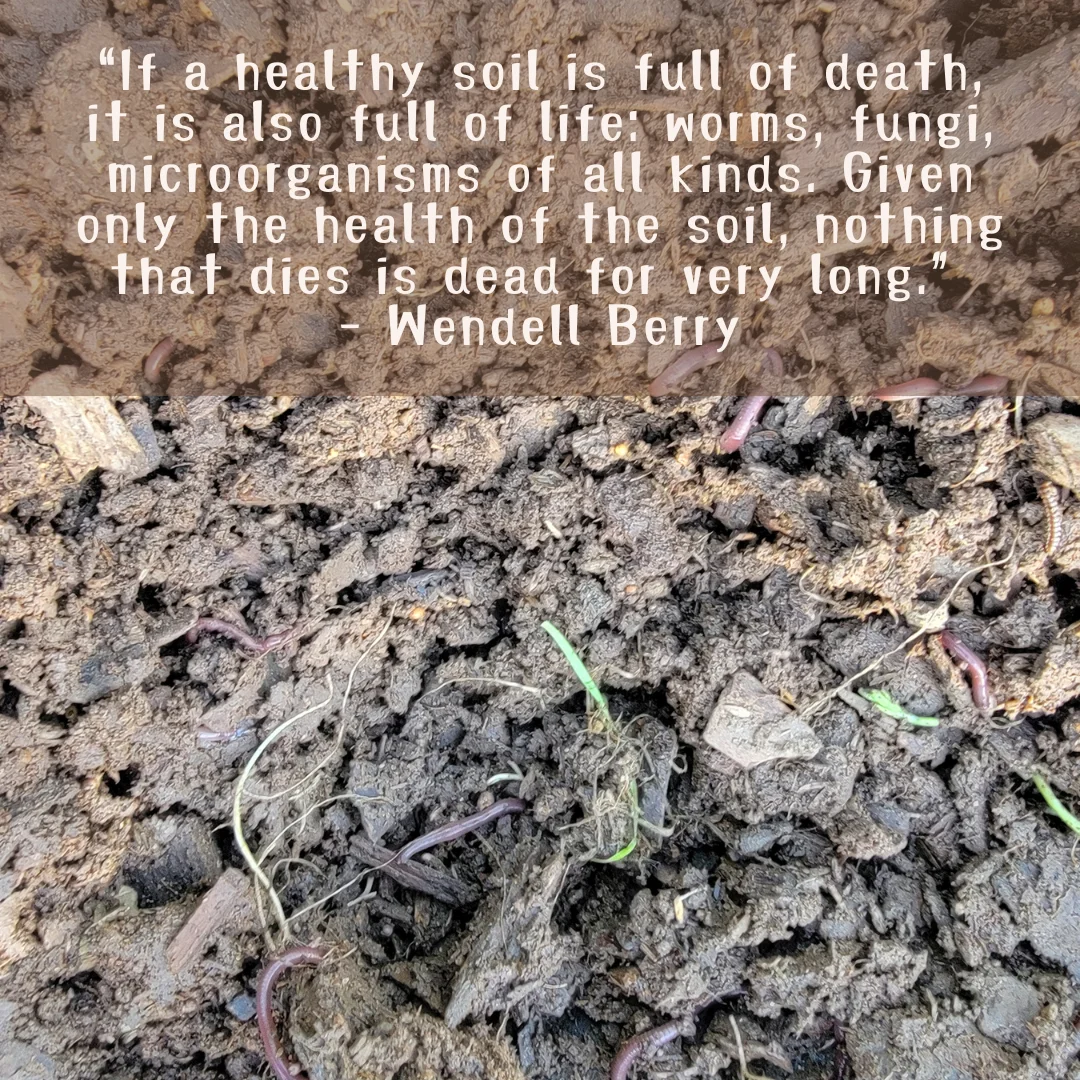
Starting a Worm Farm
Starting Your Own Worm Farm Throughout this series we have explored the many roles worms play in healthy soil—from compost recyclers to deep soil...
Throughout this series we have explored the many roles worms play in healthy soil—from compost recyclers to deep soil engineers. Now it is time to bring that knowledge into practice. Vermiculture allows gardeners, farmers, and even apartment dwellers to create their own living compost system and turn everyday organic waste into rich soil amendments.
Starting a worm system is surprisingly simple, and it can be done at almost any scale.
Worm Bins – Small Systems With Big Benefits
For many people, the easiest way to begin vermiculture is with a worm bin. These systems can be kept indoors, in a garage, or on a covered porch and are ideal for recycling kitchen scraps.
A basic worm bin needs only a few components:
- A container with ventilation holes
- Bedding material such as shredded paper, cardboard, or leaves
- Moisture similar to a wrung-out sponge
- Compost worms such...
Level 2 Content
This post continues with Level 2 content.
The rest of this piece is available to subscribers. It continues the series with deeper application, practical frameworks, and seasonal context.
Level 2 posts include longer research, field-tested guidance on KNF and regenerative methods, and systems thinking that connects food, land, energy, and local economies.
Premium content