Storey's in the Dirt

Regenerative Farming & Food Sovereignty

Sir Albert Howard's Composting Insights

Sir Albert Howard's Composting Insights

Premium
by Teri Storey3 min read
CompostingSoil & MicrobiologyRegenerative Agriculture

Level 1 content

Share:

Sir Albert Howard and the Return to Biological Process

Compost, observation, and living fertility

As the consequences of fragmentation became harder to ignore—soil loss, declining structure, increasing dependence on inputs—biology began to re-enter the agricultural conversation.

Not as rebellion.

As repair.

One of the most influential figures in this return was Sir Albert Howard.


A scientist shaped by observation

Howard was trained as a scientist and worked extensively in India as an agricultural researcher.

What set him apart was not rejection of chemistry, but insistence on seeing the whole system.

He paid attention to:

  • how plants responded over time
  • how animals thrived or declined on certain forages
  • how soils behaved under different management

Howard trusted observation as much as analysis.


Compost as a biological engine

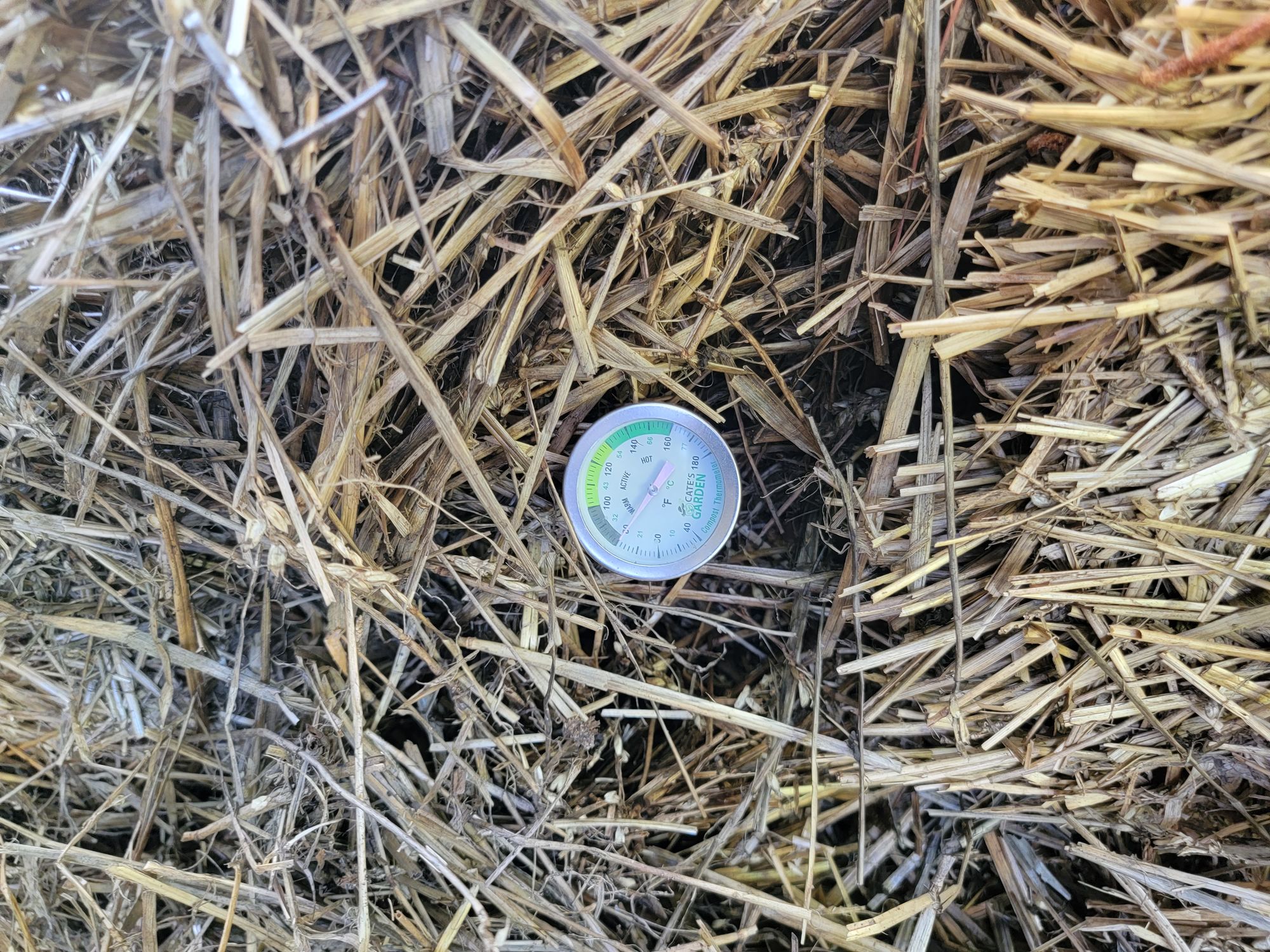
At the center of Howard’s work was compost.

Not compost as waste disposal.

But compost as a biological engine—a controlled process that transformed residues into stable, living fertility.

Howard observed that well-made compost:

  • improved soil structure
  • increased resilience to disease
  • supported consistent plant growth

These effects could not be explained by nutrients alone.


The Indore Method

Howard formalized his observations into what became known as the Indore Method of composting.

This approach emphasized:

  • balanced plant residues
  • adequate aeration
  • moisture control
  • time for biological transformation

The goal was not speed.

It was completion.

Compost was meant to resemble the stable organic matter found in healthy soils—not raw inputs hastily returned.


Soil health measured through life

Howard evaluated soil health indirectly.

Instead of relying on chemical tests alone, he looked at:

  • plant vigor and disease resistance
  • livestock health and fertility
  • the consistency of yields over time

These were integrative indicators.

They reflected how well chemistry, structure, and biology were working together.


Important framing: not anti-chemistry

Howard is often mischaracterized as anti-chemical agriculture.

He was not.

He did not reject chemistry.

He rejected fragmentation.

Howard believed that isolating nutrients from biological process led to short-term gains and long-term decline.

His critique was not of science—but of incomplete science.


The garden lesson: why compost works

Gardeners know that compost often improves everything.

Beds loosen. Plants look healthier. Water infiltrates more evenly.

Compost works because it:

  • feeds soil organisms
  • improves aggregation
  • buffers nutrients
  • supports exchange systems

It reconnects processes that chemistry alone cannot.


Why compost sometimes fails

Howard’s work also explains compost’s limits.

Compost is not a substitute for minerals.

If soils are depleted:

  • compost cannot supply missing elements indefinitely
  • imbalances remain unresolved
  • responses plateau

Biology needs a foundation.

Compost amplifies what is present—it does not replace what is absent.


Position in the series

Howard represents biology re-entering agriculture—not as ideology, but as process.

He did this without modern tools.

No DNA analysis. No microbial profiling. No soil respiration assays.

What he had was careful observation and systems thinking.

His work forms the bridge between early chemistry and modern biological soil science.

From here, the story moves toward evidence, instrumentation, and the eventual synthesis of chemistry, minerals, and biology into a more complete understanding of soil health.

Level 2 Content

This post continues with Level 2 content.

The rest of this piece is available to subscribers. It continues the series with deeper application, practical frameworks, and seasonal context.

Level 2 posts include longer research, field-tested guidance on KNF and regenerative methods, and systems thinking that connects food, land, energy, and local economies.

Part of the Agricultural Chemistry Pioneers Series

A 16-part series

Premium content

Where to Go Next

📖Next Start Here

Manifesting soil for the garden

## Introduction Manifesting soil is not quick but I can see the results! Whaaallaa! It only took two years. But did it have to take so long? Not necessarily. I could have brought in compost, however, my concern with bringing in compost is, what is it made of? Is the compost made with Non-GMO or org...

Soil & MicrobiologyComposting
Read more →