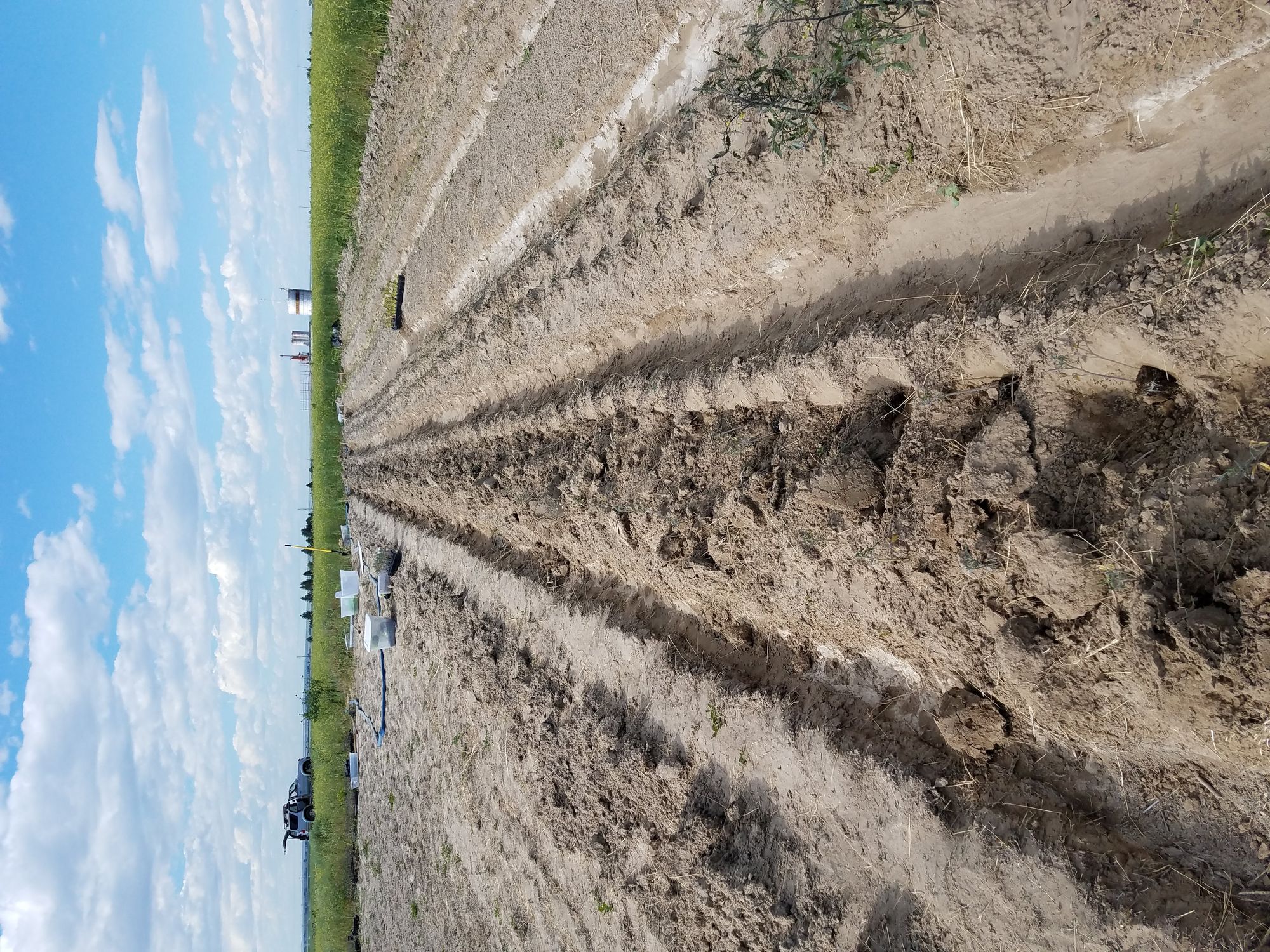
Haughley Experiment Overview
PremiumLevel 1 content
Lady Eve Balfour and the Haughley Experiment
Putting systems to the test
By the time Lady Eve Balfour began her work, the questions facing agriculture had shifted.
Chemistry had increased yields. Conservation had revealed the cost of neglecting structure. Biology had re-entered the conversation through observation and practice.
What was still missing was evidence that compared whole systems over time.
Lady Eve Balfour set out to provide exactly that.
A scientist willing to wait
Eve Balfour approached agriculture with a scientific mindset and uncommon patience.
Rather than isolating variables in short trials, she asked a larger question:
How do different farming systems perform when everything is allowed to interact?
This question required time.
And patience was something Balfour was willing to invest.
The Haughley Experiment
In 1939, Balfour initiated what became known as the Haughley Experiment.
On the same land, under the same climate, she established side-by-side farms managed under different systems:
- organic methods
- conventional chemical-based methods
The intent was not to prove a point.
It was to observe outcomes.
Side-by-side comparison of systems
What made the Haughley Experiment unique was its design.
Variables were not stripped away. They were allowed to operate.
Soil, crops, livestock, and management practices interacted as they would on real farms.
This allowed Balfour to examine:
- soil structure and fertility over time
- crop health and resilience
- livestock condition and disease
- long-term productivity
The comparison was holistic.
Early longitudinal research
Balfour understood something still underappreciated today:
Time is a variable.
Short trials can mislead.
Some systems perform well initially and degrade later. Others build resilience slowly.
The Haughley Experiment unfolded over years, revealing trends that short-term studies could not capture.
Health outcomes tied to soil management
One of the most significant aspects of Balfour’s work was her attention to health.
She observed links between:
- soil management practices
- crop quality
- livestock vitality
- and human health outcomes
This was not ideology.
It was correlation observed repeatedly over time.
The garden lesson: why side-by-side matters
Gardeners instinctively understand Balfour’s approach.
Trying one method in isolation tells you little.
Side-by-side beds reveal differences clearly:
- structure
- vigor
- disease resistance
- water behavior
Comparison turns opinion into observation.
Why time changes the answer
Some amendments shine in the first season. Others reveal their value years later.
Balfour’s work reminds us that:
What works now may not work forever.
And conversely:
What builds slowly may last.
Position in the series
Lady Eve Balfour represents a critical step in agricultural history.
She moved the conversation from theory and philosophy into evidence-building at the systems level.
Her work did not reject chemistry.
It tested it—alongside biology, structure, and management—over time.
The Haughley Experiment stands as one of the earliest attempts to evaluate agriculture holistically.
From here, the story moves into an era where policy, scale, and ideology begin to diverge—and where the question becomes not just what works, but what lasts.
Level 2 Content
This post continues with Level 2 content.
The rest of this piece is available to subscribers. It continues the series with deeper application, practical frameworks, and seasonal context.
Level 2 posts include longer research, field-tested guidance on KNF and regenerative methods, and systems thinking that connects food, land, energy, and local economies.
Part of the Agricultural Chemistry Pioneers Series
A 16-part series
Sir Albert Howard's Composting Insights
Where to Go Next
CHNOPS: Building Blocks of Life
Level 1 content
Sir Albert Howard's Composting Insights
Level 1 content
Soil as an Active Exchange System
Level 1 content