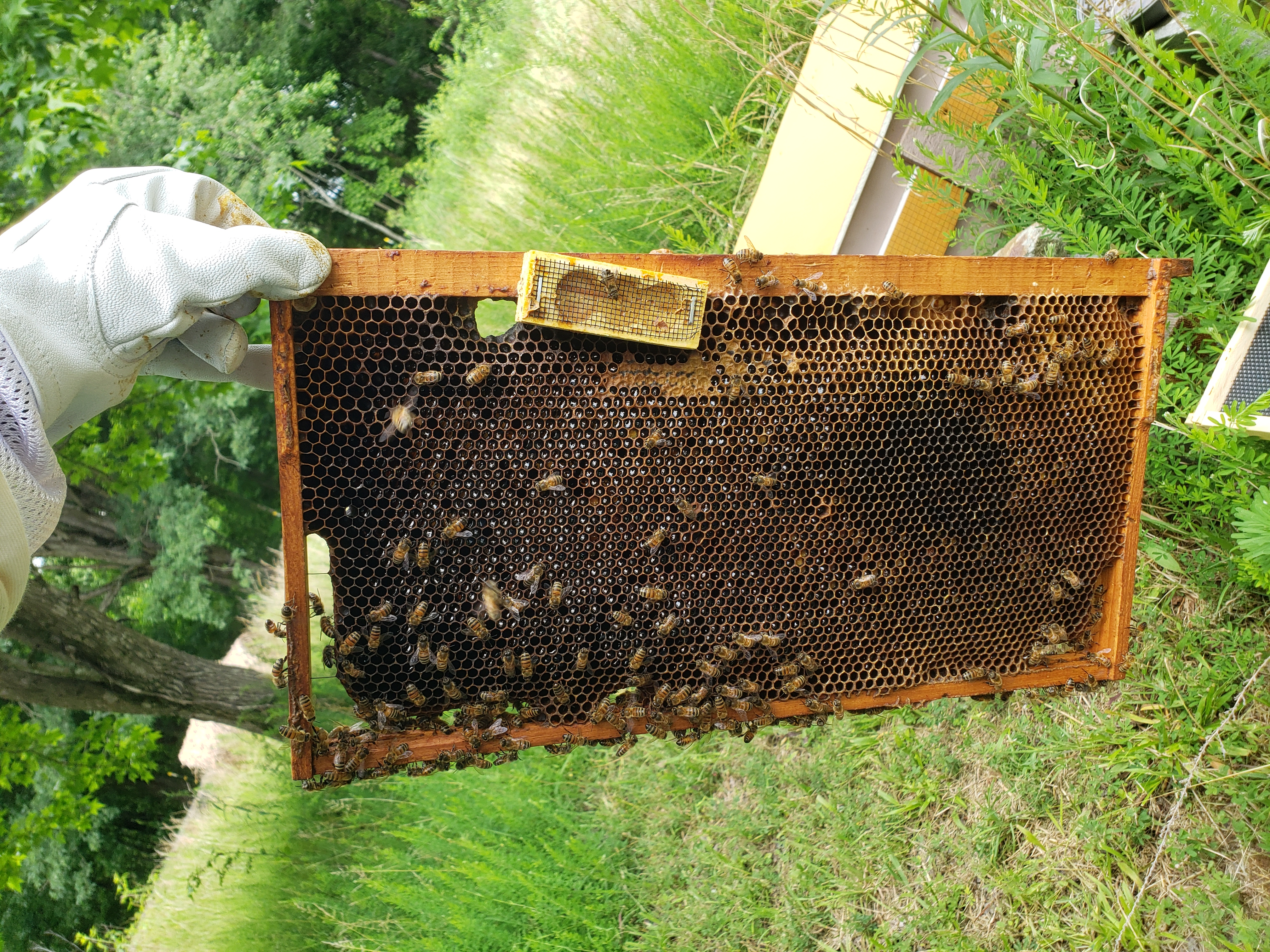
Myths and Misnomers: Apiculture Myth #7
## You Must Requeen Every Year to Maintain a Productive Hive **Truth:** _Bees know when to replace their queen—trust their timing._ In commercial beekeeping, it’s common practice to requeen hives every year. The reasoning is simple: a young queen is typically more productive, and requeening preven...
Listen to this post
You Must Requeen Every Year to Maintain a Productive Hive
Truth: Bees know when to replace their queen—trust their timing.
In commercial beekeeping, it’s common practice to requeen hives every year. The reasoning is simple: a young queen is typically more productive, and requeening prevents issues like swarming or brood interruption. But this mechanical approach to hive management isn’t always necessary—and can sometimes do more harm than good.
The Industrial Logic
Commercial operations are designed for maximum output and minimal risk. Requeening annually helps ensure strong egg-laying, reduces the chance of queen failure, and supports uniform management across hundreds or thousands of hives.
But for small-scale or natural beekeepers, there’s no one-size-fits-all answer.
Let the Bees Decide
In healthy, balanced colonies, bees monitor their queen constantly. If she falters—lays fewer eggs, produces weak pheromones, or shows signs of aging—the workers will begin to raise a replacement.
This process, called supersedure, is gentle, timely, and bee-led. It allows for:
-
A natural transition,
-
Continuity in colony rhythm,
-
And preservation of locally adapted genetics.
The Natural Beekeeper’s Take
Rather than forcing requeening on a schedule, focus on observing queen performance:
-
Is brood healthy and consistent?
-
Are workers calm and purposeful?
-
Is the hive expanding at a natural pace?
Only step in if there are signs of distress, disease, or prolonged brood gaps. And when you do replace a queen, consider letting the bees raise their own instead of introducing a commercially bred one.
Final Thoughts
Requeening every year may work for industrial systems. But in smaller or natural setups, it can interrupt hive stability and erode genetic resilience.
The bees know what to do. Sometimes, the best thing we can do is step back and let the cycle unfold.