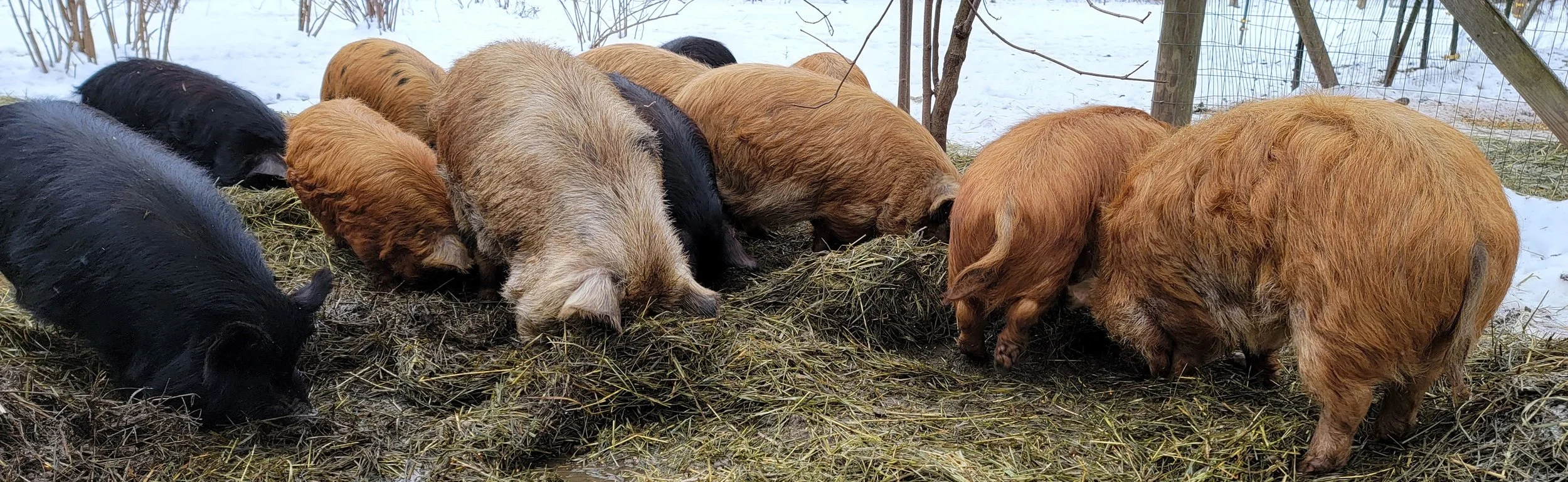
What is a KuneKune Pig
The **KuneKune pig** is a small, heritage breed of domestic pig originally from **New Zealand**. Known for their **gentle temperament**, **grazing ability**, and **compact size**, they have become a popular choice for small farms, homesteads, and even as pets. Here are some key characteristics: ###...
Listen to this post
The KuneKune pig is a small, heritage breed of domestic pig originally from New Zealand. Known for their gentle temperament, grazing ability, and compact size, they have become a popular choice for small farms, homesteads, and even as pets. Here are some key characteristics:
Origins & History
- Originally bred by the Māori people of New Zealand.
- Nearly went extinct in the 1970s but was revived through conservation efforts.
- The breed name “KuneKune” means "fat and round" in Māori.
Physical Characteristics
- Size: Small to medium, typically 100–250 lbs when fully grown.
- Body Shape: Stocky with short legs and a round, compact frame.
- Snout: Short and upturned, well-adapted for grazing rather than rooting.
- Coat: Can be smooth or hairy, with colors including black, white, ginger, brown, cream, or spotted.
- Wattles: Many have small, fleshy wattles (tassels) hanging under their chin.
Temperament & Behavior
- Extremely docile, friendly, and intelligent.
- Rarely aggressive, making them ideal for children or beginner pig owners.
- Social animals that do well in groups.
Grazing & Diet
- Unlike other pig breeds that root aggressively, KuneKunes are natural grazers.
- Thrive on pasture-based diets, needing less grain than other pigs.
- Their gentle foraging habits make them excellent for rotational grazing without damaging land.
Uses & Benefits
- Homesteading: Great for sustainable pasture-based pork production.
- Pets: Due to their friendly nature and smaller size.
- Orchards & Vineyards: Used for weed control without excessive rooting.
- Conservation: Many farms raise them as part of heritage breed preservation.
Pros & Cons
✅ Pros:
✔️ Easy to manage, even for beginners.
✔️ Require less feed than commercial pig breeds.
✔️ Gentle on pastures, great for permaculture systems.
✔️ Hardy and adaptable to various climates.
✔️ Great personalities – social, intelligent, and trainable.
❌ Cons:
✖️ Grow slower than commercial pig breeds.
✖️ Some can become overweight if not managed properly.
✖️ Require access to pasture and social interaction for best health.
KuneKunes are an excellent choice for those looking for a sustainable, friendly, and easy-to-raise pig breed. Are you considering raising them?
Posts 1–3 free · Premium starts at #4