Eggshells for the Garden
## Introduction If you have as many eggshells as I do, you probably already know this is a great calcium source for your chickens. I keep a cast iron pan in the oven and after breakfast place all my eggshells there for safekeeping. When I have enough to fill the pan, I turn the oven on to the lowes...
Listen to this post
Introduction
If you have as many eggshells as I do, you probably already know this is a great calcium source for your chickens. I keep a cast iron pan in the oven and after breakfast place all my eggshells there for safekeeping. When I have enough to fill the pan, I turn the oven on to the lowest setting for about 15-20 minutes and let bake the shells.
After baking I let them cool. Once cooled, I crush them and place in a jar for storage. These crushed shells can then be added to the chicken feed or placed nearby as a calcium source for the birds.
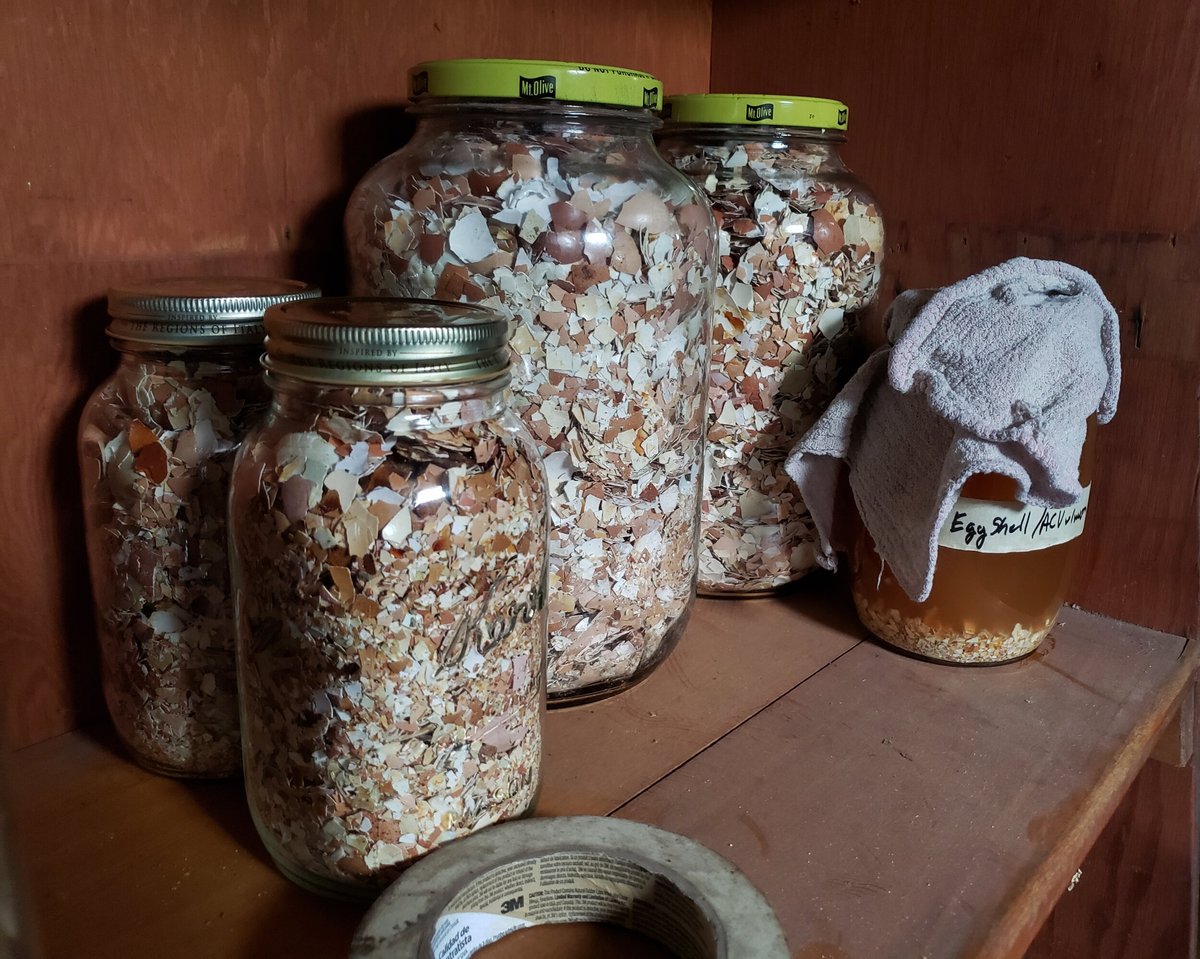
You might even add them to your compost pile, for a calcium boost to your soil in the spring. But did you know you can use them as a biostimulant in your garden? Simply fill a jar about 1/10 - 1/15th full with eggshells. Then fill nearly to the top with Apple Cidar Vinegar (ACV with Mother), leaving about 1-inch clearance for bubbles due to fermentation. Cover with a cloth or loose-fitting lid or cover. You do not want to seal this as the solution will expand, and could break the vessel. Mark the jar and date. Store in a temped, dark space and let rest. The fermentation will do the rest.
After a few weeks, the solution will be fermented. Decant this solution, by running the liquid through a sieve and or cheesecloth to remove all the sediment. The debris can be used again, 3 to 5 more times. Place the liquid in a container, seal and place in a well ventilated cool dark space.
This solution will be full of micro and macrominerals for the garden. It can be used as a foliar spray or drench, on its own or in conjunction with other ferments. Be sure to dilute with good water. According to Nigel Palmer, this solution should be diluted at a rate of 1:500 (One Tbls to 4 gallons good water or 15L ) up to 1:1000.
The rule of thumb when natural crafting your homemade ACV extract is less is more. When in doubt, do a small test area. If after 24-48 hours, you have positive results, you can proceed with confidence. Testing a small area is a good idea any time you amend your garden.
Happy Gardening!
Posts 1–13 free · Premium starts at #14